








Work Team
Temporary professional association:
Project coordination and integration of specialized services: Prof. Arch. Giuseppe Cristinelli, Arch. Giordano-Bruno Cristinelli; Architectural and construction design: Prof. Arch. Giuseppe Cristinelli (lead), Arch. Giordano-Bruno Cristinelli, Arch. Dario Maso; Systems, fire protection, acoustics, and energy design: Eng. Roberto Taddia, Eng. Giulio Gentilli; Investigations on historical materials and decorated surfaces: Rest. Francesco Geminiani; Seismic vulnerability assessment and structural design: Eng. Giampaolo Guaran, Eng. Giulio Gentilli; Safety coordination during design phase: Eng. Giulio Gentilli; Dr. Geol. Claudia Beatrice Mosangini for site geology.
Description and historical references
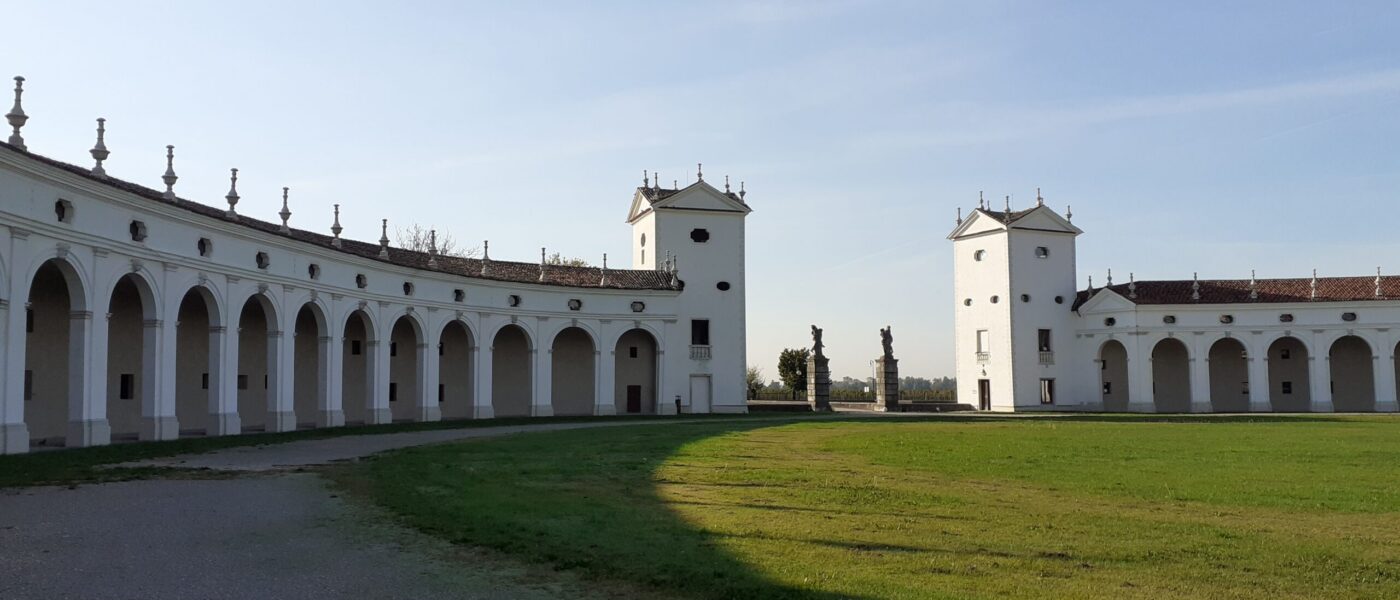
Villa Manin, located in Passariano di Codroipo (UD), was built between the 17th and 18th centuries by prominent architects such as Giuseppe Benoni, Domenico Rossi, Giovanni Ziborghi, and Giorgio Massari. Originally constructed as a rural residence for the Manin family, it gradually evolved into a monumental complex of great cultural significance. Spanning approximately 8,500 square meters with an 18-hectare park, the complex includes the main building, a noble chapel, barchesse, the Quadra and Tonda squares, exedras, guesthouses, the East Tower, and an Italian-style garden. Positioned along the “Stradone Manin” between the Stella and Tagliamento rivers, the villa held a strategic location. The construction, initiated by Ludovico I Manin with Benoni’s design, lasted about a century. Rossi designed the two squares, while Massari completed the work with a monumental belvedere. The complex is enriched by statues in the courtyards and significant 18th-century decorative elements, including frescoes by Ludovico Dorigny, Jacopo Amigoni, and Pietro Oretti, paintings by Francesco Fontebasso, and sculptures by Torretti. The eastern hall, decorated by Dorigny, features a ceiling with the Triumph of Spring and four allegorical ovals, while the walls depict mythological scenes on a golden background. The vibrant, illusionistic style fully reflects the Baroque taste of the era. The restoration focused on the Exedra, the East Tower, and other minor buildings, which, together with the West Exedra, frame the Tonda Square. The project aims at a museum conversion while preserving the original spatial and distributional characteristics. Despite limited historical sources and 20th-century modifications, the intervention enhances the complex’s authenticity, integrating new functions in harmony with its historical and architectural value.
Services provided
Preliminary, definitive, and executive design; coordination of specialized services, construction management for building and architectural restoration works.
The project
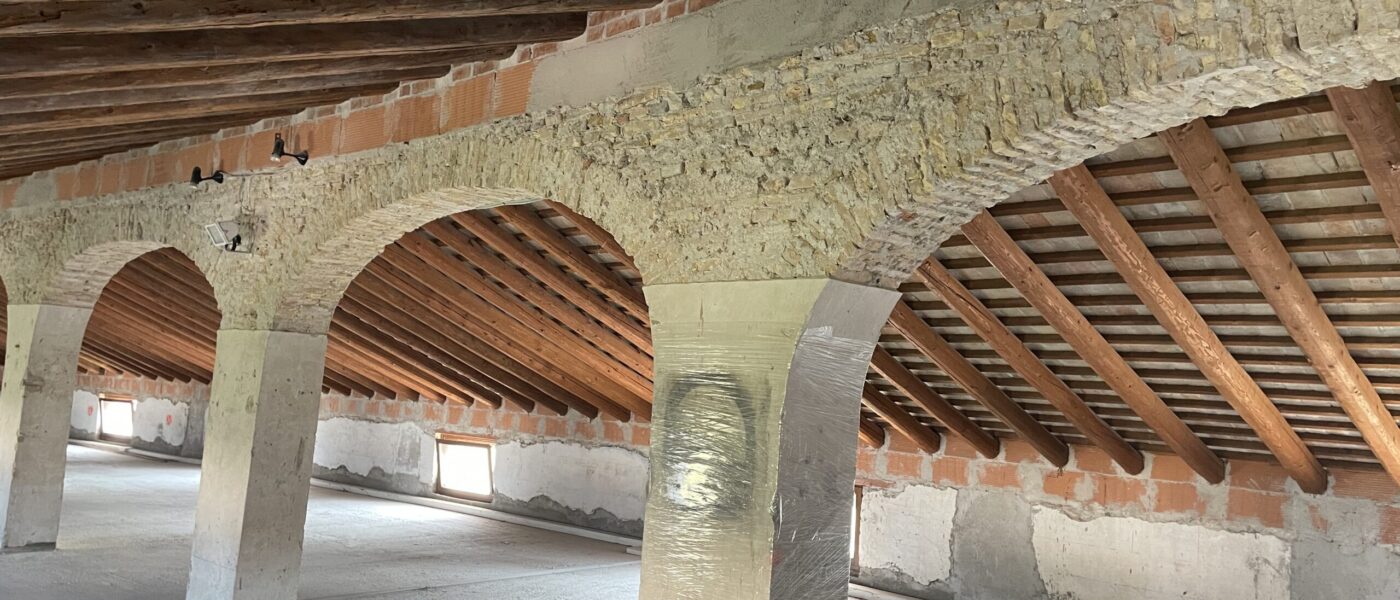
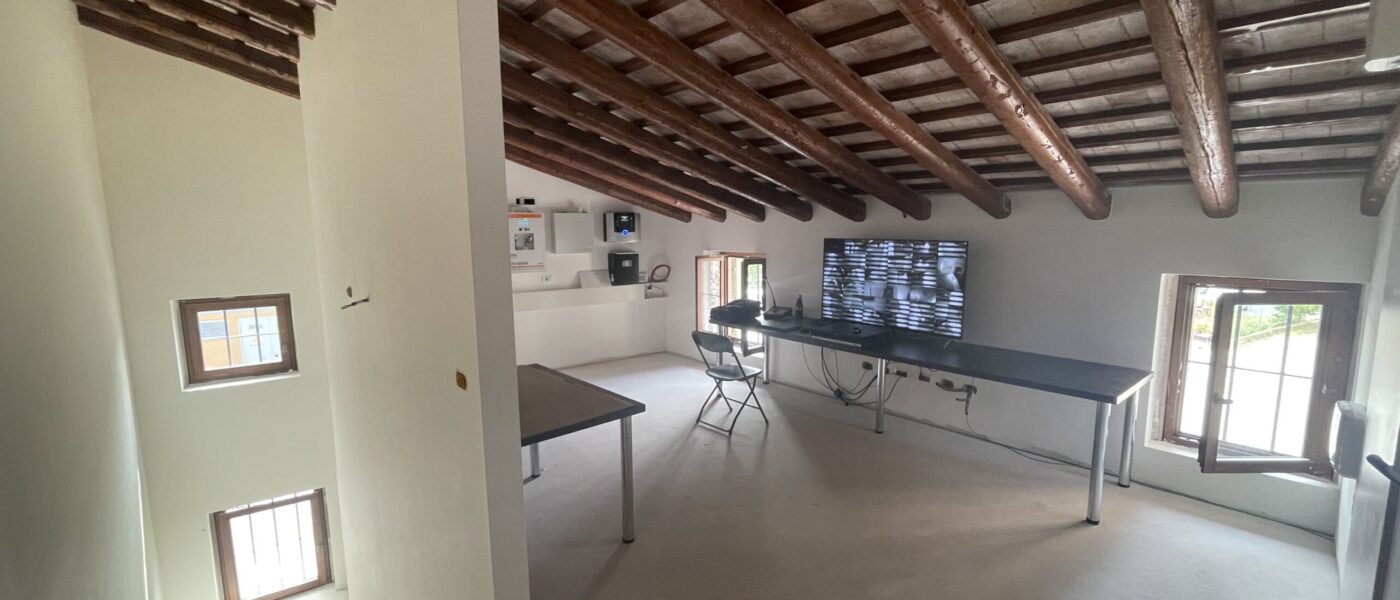
The restoration project involves a functional reorganization of the Exedra, the East Tower, and the annexed building, with a clear definition of intended uses and internal pathways, aimed at enhancing the museum layout. On the ground floor, the Exedra will host nine exhibition rooms. The main access remains at the base of the Tower, now directly connected to the southern cell of the Exedra (secondary atrium) via a new opening and a ramp addressing a 15 cm height difference. The northern room will serve as an artwork storage space, while the annexed building will house staff changing rooms, services, and a public bathroom at the southern end. The central and southern stairwells will accommodate air treatment systems. On the first floor of the Exedra, seven exhibition rooms are planned, with a layout consistent with the ground floor. The Tower will serve as a vertical connection to the second floor, where the exhibition begins. Public restrooms will be located at the northern and southern ends, with systems near the stairwells. The first floor of the annexed building will host a Control Room with a private bathroom. The second floor will be partially exhibition space and partially dedicated to ancillary functions (refreshment point, audio guides, lockers), using lightweight, removable elements to respect the open spatiality and low-arched arcades. Services and technical rooms will be concentrated at the northern and southern ends. A new Tower–Exedra connection is planned through an opening in the southern room, formerly a silkworm hatchery, with a three-step connection. The exhibition path spans three levels: entry from the Tower, visit to the second floor (south to north), descent to the first floor (north to south), and ground floor (south to north), concluding at the northern end of the Exedra. From there, visitors return to the second floor (north to south) to access services before exiting via the southern staircase. Only the end staircases are for public use; the central one is reserved as an escape route. The Tower is fully integrated into the museum function as a vertical connection axis. Before opening the new second-floor passage, a stratigraphic survey is planned, although prior investigations found only decorative traces of no prohibitive value.
Project deliverables
The project documentation includes: the technical variant report, approved drawings at 1:100 scale (plans, elevations, and sections), and the variant project at 1:50 scale, divided into modules for each floor, with detailed studies on elevations, sections, and roofing, including the Tower. Additionally, there are comparative drawings between the variant, approved project, and existing state, along with construction details for windows, staircases, floors, and exhibition systems. The specialized restoration of the East Tower is documented with technical reports, photographic surveys, interventions on internal and external surfaces, and a quantity survey. The collection is completed by technical drawings related to the building across its various project phases.