




Project Team
Prof. Arch. Giuseppe Cristinelli, design coordination lead; Prof. Arch. Giuseppe Cristinelli (Studio Cristinelli), Prof. Arch. Manfred Wehdorn, Arch. Vittorio Foramitti, architectural restoration; Studio Altieri S.p.A., general coordination; Eng. Giuseppe Suraci, structural restoration; Studio ETA Progetti, systems engineering design.
Services Provided
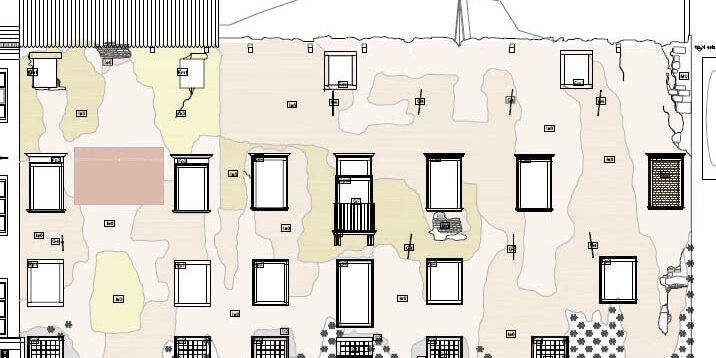
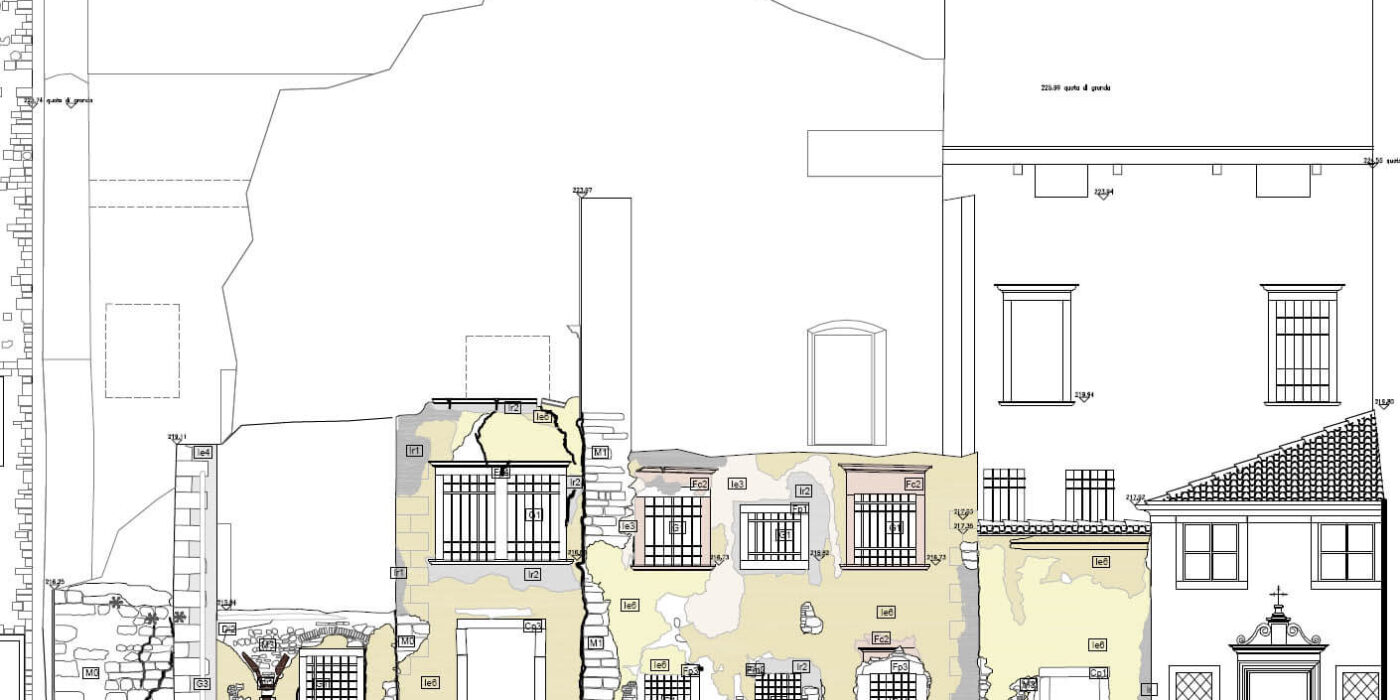
Historical and archival research, metric survey, geological and geotechnical investigations, archaeological survey, studies of materials, construction techniques, structural conditions, deterioration and damage, photographic campaign.
The Project
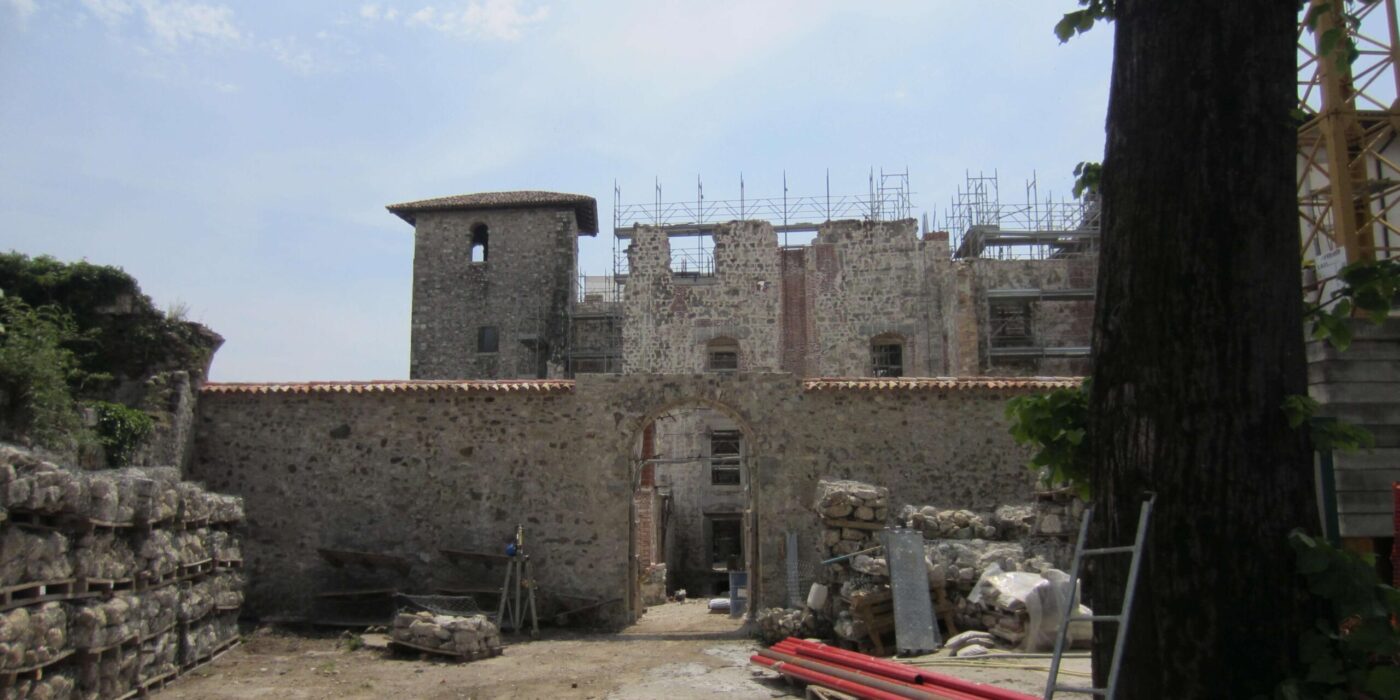
The project involves the reconstruction of the complex in the configuration it had before the 1976 earthquake, through conservation of the surviving structures and reconstruction of the lost parts based on surveys and pre-earthquake photographic documentation. The rehabilitation of the complex will include the introduction of new public functions and the reassignment of individual real estate units to their original private owners. Large portions of the complex will be designated for public ownership, intended for museum, exhibition, and conference use.
The project is framed as a restoration and redevelopment intervention, aimed at returning the castle to the community, adapted to contemporary functions and therefore ensuring its preservation and ongoing maintenance. The intention to restore Colloredo Castle—also through defined philological reconstructions—is based on the most recent international cultural approaches to restoration and conservation. These approaches assume that architecture and monuments cannot be reduced to their material, formal, or functional components alone, but must be seen as architectural substance in which all these aspects converge.
In this case, the architectural substance remains legible even where seismic events caused partial destruction. The restoration, including partial reconstruction, is thus consistent with the preservation of this substance. The reconstruction is never a mere exercise in conjectural philology or stylistic imitation, but is based on scientifically verified and documented elements.
Floors and roofs will be rebuilt in wood, with any surviving parts preserved. The few existing floors will be dismantled, integrated as needed, and reinstalled. Exterior masonry walls will be preserved with cleaning, recessed joint sealing, consolidation, and restoration of the oldest plasters; more recent or cement-based plasters will be removed. New finishes will be made with similar materials and techniques but will remain distinguishable from the originals. All stone elements recovered from the rubble will be preserved and reassembled; missing pieces will be reconstructed.
Project Documentation
All documentation related to the investigations and the preliminary, final, and executive design phases.
Design Phase Durations
Preliminary design: 90 days
Final design: 120 days
Executive design: 90 days
Work Packages
Two
Start and End of Services
2002–2012
Contractor and Subcontracting
Coveco